
Hair Repair Routine After Colouring
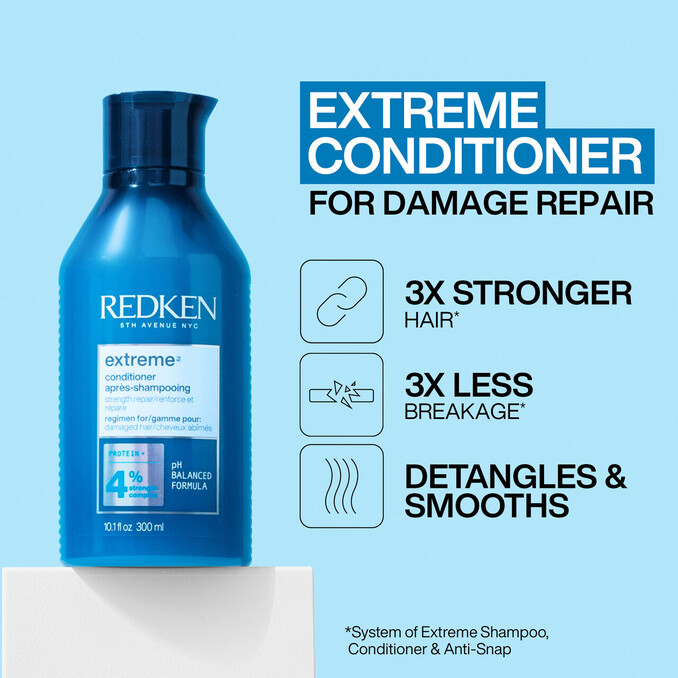
Most clients who come to us for hair repair have the same story. Years of colour, sometimes lightening, sometimes a few keratin treatments along the way, and now the hair feels brittle at the ends, the mid-lengths look dull, and the strands snap when wet. The shampoo they have been using promises repair on the bottle but nothing has changed.
The reason nothing has changed is that repair is not one product. It is a routine, and it has to be built around what coloured hair actually needs, in the right order. This is the routine our hair specialists at DASHE Beauty in Yarmouk recommend to clients who want to rebuild their hair without giving up colour.
What colouring actually does to the hair
Every time hair is coloured, the cuticle has to open to let pigment in. Bleaching does the same thing more aggressively, and also breaks the disulphide bonds that give the hair shaft its structural strength. Over years, this leaves the hair more porous, weaker at the protein level, and drier because moisture escapes through the open cuticle faster than it can be replaced.
A good repair routine has to address all three of those things. Bonding, to rebuild the broken structural links. Protein, to refill the strand. Hydration, to seal moisture back in. Skipping any of the three leaves a gap.
Step one: bonding
Bond builders are the most important development in hair repair in the last decade. These are products that contain small molecules designed to find broken disulphide bonds inside the hair shaft and link them back together. The two best-known are K18 and Olaplex. Both work, both are stocked at DASHE, and both target the same problem from slightly different chemistry angles.
Bond builders are not used every day. They are a treatment, applied once a week or once every two weeks depending on hair condition. K18 is a leave-in mask, applied to clean damp hair after shampoo and left in for at least four minutes before any other product. Olaplex No. 3 is a pre-shampoo treatment, applied to damp hair and left for ten minutes or longer before washing out.
Pick one. You do not need both. Use it consistently for six to eight weeks before judging whether it is working.
Step two: protein
Protein treatments are not the same as bond builders. They work on a different layer of the hair shaft. Where bonding rebuilds structural links, protein refills the strand itself with the keratin and amino acids that have been stripped out by colour processing.
Coloured hair needs protein treatments approximately once every three to four weeks. Too often and the hair becomes stiff and brittle, a condition called protein overload. Too rarely and the hair stays weak. The right cadence depends on how damaged the hair is and how often it is being coloured. Our hair team can assess this in the chair and tell you what schedule to follow.
Protein treatments at DASHE can be done as a salon service, where we use professional-grade products and apply them with controlled heat for deeper penetration, or you can buy a take-home version to use between visits. Both work. The salon version works faster.
Step three: daily hydration
This is the boring step that most clients skip and that makes the biggest difference long-term. Coloured hair loses moisture faster than virgin hair. Without daily hydration, the bonding and protein work gets undone in the periods between treatments.
Daily hydration is two products. A sulphate-free shampoo, because sulphates strip out colour and treatment products faster, and a conditioner with humectants like glycerin and panthenol that pull water into the hair shaft. Use them every wash, no exceptions.
We also recommend a leave-in hydrator on damp hair before styling. This is a step most clients resist because it sounds like one more product. It is the single most effective thing for the way coloured hair looks day to day. Hair that has been hydrated before heat styling holds shine longer, lies smoother, and breaks less.
What to avoid
A few things make damaged coloured hair worse and they are easy to keep doing without realising it.
Hot water on wet hair, especially in the shower, opens the cuticle and accelerates colour fade. Lukewarm is better.
Towel drying with a regular cotton towel roughs up the cuticle and causes breakage at the mid-lengths. A microfibre towel or an old cotton t-shirt is gentler.
Brushing wet hair with a regular brush stretches the hair and snaps it. Use a wide-tooth comb starting at the ends and working up.
Heat styling without a heat protectant leaves the cuticle exposed to direct heat at flat-iron temperatures that can hit 200°C. Always use a heat protectant. Always.
Booking a hair assessment
If you have been colouring your hair for a long time and the repair routine is not working, the issue is usually one of three things. The wrong product order. The wrong cadence. Or damage that has gone past the point where home routines can fix it on their own and now needs a salon-level intervention first to get the hair to a baseline where home care can take over.
Our hair specialists at DASHE offer hair assessment consultations. We look at porosity, elasticity, and condition, and we recommend a product routine you can actually follow at home. If you would like us to put a complete repair routine together for you using products from our hair care collection, we can do that in a single appointment.
Message us on WhatsApp at +965 66307999 or visit us at Al Saqran Mall, Yarmouk. We are open Sunday through Saturday, 9:00 AM to 9:00 PM.
Shop related products: K18 Leave-in Molecular Repair Hair Mask, Lucido-L High Damage Repair Hair Milk
Related: K18 Hair Repair Products in Kuwait, Curly Hair Care in Kuwait: Full Routine. Explore our services: Hair Coloring.
Our services: Hair Services
